
### Quick Summary: Live Blackjack Fast Facts
* Standard Table Payout: Natural Blackjack pays 3:2 (avoid 6:5 tables)
* Shoe Configuration: 8 standard 52-card decks shuffled via automated shoe or continuous shuffler
* Dealer Rules: Dealer stands on all 17s (including Soft 17) on European/Vegas standard tables
* Core Player Options: Double down on any two initial cards; split matching rank pairs once; insurance pays 2:1
* Theoretical House Advantage: As low as 0.49% to 0.58% when applying mathematically perfect Basic Strategy
* Popular Side Bets: 21+3 (Poker hands: Flush, Straight, Three of a Kind) and Perfect Pairs (Mixed, Colored, Perfect).
Among all casino table games, Blackjack stands apart as the one game where player decision-making directly dictates the house advantage. While roulette, baccarat, and slot machines rely entirely on chance once a bet is placed, every card dealt in Blackjack gives you tactical control: Hit, Stand, Double Down, or Split.
When played with mathematically optimal Basic Strategy, Live Dealer Blackjack on JLJL6 offers one of the lowest house advantages in the casino industry—often dipping below 0.50%. However, deviating from mathematically proven decision charts will quickly cause the house edge to swell past 2.5% or higher. This comprehensive technical guide breaks down table rules, basic strategy charts, dealer upcard dynamics, and disciplined bankroll management for Philippine players.
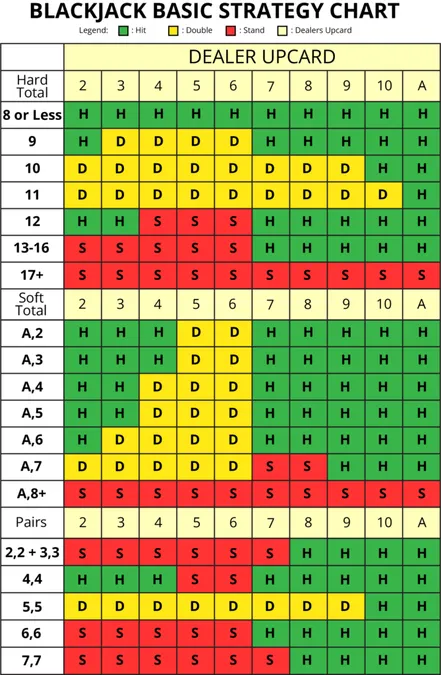
Live Table Rules and Standard Blackjack Conditions
Before taking a seat at any live blackjack table, you must verify the table’s structural rules. Minor rule variations can significantly alter your expected return.
Standard Live Table Conditions on JLJL6:
┌────────────────────────────────────────────────────────┐
│  Blackjack Payout:          3:2 (₱100 bet pays ₱150)   │
│  Dealer Soft 17 Rule:       Dealer STANDS on Soft 17   │
│  Number of Decks:           8 Decks (Manual or Shoe)   │
│  Double Down Restrictions:  Allowed on ANY 2 Cards     │
│  Double After Split (DAS):  Permitted                  │
│  Split Limits:              Split once into 2 hands    │
│  Insurance Payout:          2:1 (Mathematical Trap)    │
│  Surrender Option:          Late Surrender (Select)    │
└────────────────────────────────────────────────────────┘
The Critical Rule: Always Demand 3:2 Payouts
The single most detrimental rule variation in modern casinos is the 6:5 blackjack payout.
- On a 3:2 table, hitting a natural 21 with a ₱1,000 bet pays ₱1,500.
- On a 6:5 table, that exact same hand pays only ₱1,200—costing you ₱300 on every natural blackjack.
- Playing on a 6:5 table increases the house edge by a staggering 1.39%, completely erasing any strategic edge gained through skillful play. At JLJL6, our live dealer partner tables (including Evolution and Pragmatic Play) maintain the standard player-friendly 3:2 payout.
Dealer Upcard Probabilities and Vulnerability Analysis
Basic Strategy is built around a single foundational principle: your decision depends entirely on the dealer's visible upcard.
Because the dealer must follow rigid, mechanical drawing rules (typically hitting until reaching at least 17), certain upcards place the dealer in an extremely vulnerable position.
Dealer Upcard Bust Probabilities (8-Deck Shoe, Stand on Soft 17):
┌──────────────┬──────────────────┬─────────────────────────────┐
│ Dealer Card  │ Bust Probability │ Strategic Classification    │
├──────────────┼──────────────────┼─────────────────────────────┤
│ 2            │ 35.3%            │ Moderate Dealer Hand        │
│ 3            │ 37.6%            │ Moderate Dealer Hand        │
│ 4            │ 40.3%            │ VULNERABLE (Bust Card)      │
│ 5            │ 42.9%            │ HIGHLY VULNERABLE           │
│ 6            │ 42.1%            │ MAXIMUM VULNERABILITY       │
│ 7            │ 26.0%            │ Strong Dealer Hand (Pat)    │
│ 8            │ 23.9%            │ Strong Dealer Hand          │
│ 9            │ 23.3%            │ Strong Dealer Hand          │
│ 10 / Face    │ 21.4%            │ Dominant Dealer Hand        │
│ Ace          │ 11.6%            │ Premier Dealer Advantage    │
└──────────────┴──────────────────┴─────────────────────────────┘
The 4, 5, and 6 Bust Cards:
When the dealer shows a 4, 5, or 6, their probability of busting exceeds 40%. In these situations, your goal is not to build a high total, but simply to avoid busting yourself. You stand on stiff totals (12 through 16) and aggressively Double Down on 9, 10, and 11 to extract maximum value when the dealer breaks.
Conversely, when the dealer shows a 7, 8, 9, 10, or Ace, their bust rate drops below 26%, and they will finish with a 17 or higher nearly three-quarters of the time. Against strong dealer cards, you must hit your stiff totals (even risking a bust) to give yourself a chance to reach a competitive score.
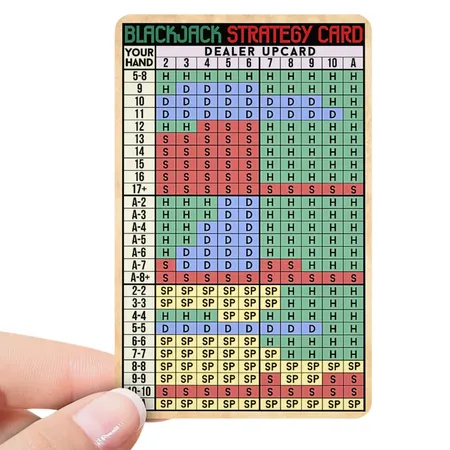
Basic Strategy Decision Matrix
Basic Strategy was developed using computer simulations of hundreds of millions of hands to identify the mathematically optimal play for every possible combination.
Key Strategy Abbreviations:
H = Hit  |  S = Stand  |  D = Double Down (Hit if not allowed)  |  SP = Split Pair
Hard Hands (Hands without an Ace, or where Ace must count as 1)
| Player Total | Dealer 2 | Dealer 3 | Dealer 4 | Dealer 5 | Dealer 6 | Dealer 7 | Dealer 8 | Dealer 9 | Dealer 10 | Dealer A |
|---|---|---|---|---|---|---|---|---|---|---|
| 8 or Less | H | H | H | H | H | H | H | H | H | H |
| 9 | H | D | D | D | D | H | H | H | H | H |
| 10 | D | D | D | D | D | D | D | D | H | H |
| 11 | D | D | D | D | D | D | D | D | D | D |
| 12 | H | H | S | S | S | H | H | H | H | H |
| 13 to 16 | S | S | S | S | S | H | H | H | H | H |
| 17 to 20 | S | S | S | S | S | S | S | S | S | S |
Soft Hands (Hands containing an Ace counted as 11)
| Player Hand | Dealer 2 | Dealer 3 | Dealer 4 | Dealer 5 | Dealer 6 | Dealer 7 | Dealer 8 | Dealer 9 | Dealer 10 | Dealer A |
|---|---|---|---|---|---|---|---|---|---|---|
| A,2 & A,3 | H | H | H | D | D | H | H | H | H | H |
| A,4 & A,5 | H | H | D | D | D | H | H | H | H | H |
| A,6 | H | D | D | D | D | H | H | H | H | H |
| A,7 | S | D | D | D | D | S | S | H | H | H |
| A,8 & A,9 | S | S | S | S | S | S | S | S | S | S |
Pair Splitting
| Pair | Dealer 2 | Dealer 3 | Dealer 4 | Dealer 5 | Dealer 6 | Dealer 7 | Dealer 8 | Dealer 9 | Dealer 10 | Dealer A |
|---|---|---|---|---|---|---|---|---|---|---|
| A,A & 8,8 | SP | SP | SP | SP | SP | SP | SP | SP | SP | SP |
| 10,10 | S | S | S | S | S | S | S | S | S | S |
| 9,9 | SP | SP | SP | SP | SP | S | SP | SP | S | S |
| 7,7 | SP | SP | SP | SP | SP | SP | H | H | H | H |
| 6,6 | SP | SP | SP | SP | SP | H | H | H | H | H |
| 5,5 | D | D | D | D | D | D | D | D | H | H |
| 4,4 | H | H | H | SP | SP | H | H | H | H | H |
| 2,2 & 3,3 | SP | SP | SP | SP | SP | SP | H | H | H | H |
Evaluating Side Bets: 21+3 and Perfect Pairs
Live blackjack tables often offer optional side bets. While these side bets feature high multiplier payouts, their underlying house edge is significantly higher than the main game.
Side Bet Mathematical Profile:
┌─────────────────────┬──────────────────┬──────────────────┬─────────────────┐
│ Side Bet Option     │ Winning Hand     │ Payout Odds      │ House Advantage │
├─────────────────────┼──────────────────┼──────────────────┼─────────────────┤
│ 21+3                │ Suited Trips     │ 100:1            │                 │
│ (Player's 2 cards   │ Straight Flush   │ 40:1             │ 3.23% to 4.14%  │
│  + Dealer upcard)   │ Three of a Kind  │ 30:1             │                 │
│                     │ Straight         │ 10:1             │                 │
│                     │ Flush            │ 5:1              │                 │
├─────────────────────┼──────────────────┼──────────────────┼─────────────────┤
│ Perfect Pairs       │ Perfect Pair     │ 25:1             │                 │
│ (Player's 2 cards   │ Colored Pair     │ 12:1             │ 5.79%           │
│  rank match)        │ Mixed Pair       │ 6:1              │                 │
└─────────────────────┴──────────────────┴──────────────────┴─────────────────┘
Why Insurance is a Mathematical Trap:
When the dealer shows an Ace, players are offered Insurance (paying 2:1) to protect against a dealer blackjack.
- In an 8-deck shoe, only 16 out of every 52 cards (30.8%) have a 10-value.
- That means the dealer will not have blackjack roughly 69.2% of the time.
- The mathematical house advantage on the insurance bet is an unfavorable 7.40%.
- Never take insurance unless you are an advanced card counter tracking an exceptionally rich deck of tens.
Bankroll Discipline at Live Tables
Because live blackjack tables have minimum stakes (typically ₱100, ₱250, or ₱500 per hand), maintaining structured bankroll controls is critical to enduring natural statistical swings.
Total Session Bankroll (e.g., ₱5,000)
              │
              ▼
Divide into Minimum 40 to 50 Betting Units (₱100 per hand)
              │
              ├──> Allocate Double/Split Reserves (Always maintain 2-3 extra units for active hands)
              │
              ├──> Profit Target (+40% / ₱7,000): Stop and cash out via [GCash](https://www.gcash.com/)
              │
              └──> Stop-Loss Limit (-30% / ₱3,500): Terminate session to protect capital
The Reserve Unit Requirement:
When playing blackjack, a portion of your bankroll must remain liquid to accommodate Doubling Down and Splitting.
If you bet your last ₱500 chip on a hand and are dealt an 11 against a dealer 6—the single most profitable double-down scenario in the game—having zero remaining balance to double your wager costs you significant expected value. Always maintain at least two reserve units for every active hand on the table.
Playing Live Blackjack on Mobile Devices
Live Blackjack tables on JLJL6 are streamed in high-definition video using responsive HTML5 technology, optimized for smartphone play.
Mobile Features:
- Pre-Decision Buttons: Select your action (Hit, Stand, Double) while preceding players are making their choices to ensure swift table flow.
- Auto-Stand Setting: Configure the software to automatically stand on Hard 17 or higher to prevent accidental misclicks.
- Direct Cashier Transitions: Smooth integration with Philippine e-wallets enables quick mobile funding and cashouts via GCash and Maya.
Frequently Asked Questions
What is the house edge in Live Blackjack?
When using perfect Basic Strategy on standard 8-deck tables where the dealer stands on Soft 17 and natural blackjacks pay 3:2, the house advantage is approximately 0.49% to 0.58%. Making arbitrary or emotional decisions increases the house advantage to 2.5% or more.
Why should I never take Insurance in Blackjack?
Insurance carries an unfavorable house edge of approximately 7.40%. In an 8-deck shoe, only about 30.8% of cards carry a value of 10. Statistically, the dealer fails to make blackjack nearly 70% of the time, making insurance an unprofitable long-term wager.
Should I always split Aces and Eights?
Yes. Mathematically, splitting Aces gives you two chances to start hands with an 11-value card, while a pair of eights totals 16 (the worst starting hand in blackjack). Splitting eights breaks up a losing total into two viable starting hands of 8.
Why should I never split a pair of Tens?
A pair of Tens gives you a total of 20, which is the second-strongest hand in blackjack and wins or pushes against the dealer over 85% of the time. Breaking up a winning 20 into two separate hands increases your risk of finishing with worse totals.
Are Live Blackjack games audited for fairness?
Yes. Live dealer studios partnering with JLJL6 (such as Evolution Gaming and Pragmatic Play) stream certified physical card deals with automated optical recognition, audited and verified by accredited independent testing agencies like eCOGRA.
What are the fastest payment methods for cashing out blackjack winnings?
The fastest payment options for Philippine players on JLJL6 are verified e-wallets including GCash and Maya. Withdrawals typically process within 10 to 20 minutes following account verification.
Internal Silo Links and Related Resources
- Parent Silo Hub: /casino/
- Explore Sibling Table & Casino Guides:
- Live Baccarat Strategy Guide
- Speed Baccarat Guide
- Lightning Roulette Guide
- European Roulette Guide
- Tongits Online Guide
- Cashier & Transaction Walkthroughs:
- GCash Deposit Guide
- GCash Withdrawal Guide
- Platform Trust & Compliance:
- Review Testing Methodology
- Responsible Gaming & Player Protection
### Responsible Gaming Notice (21+)
Blackjack is a strategic game of chance that carries financial risk. Applying Basic Strategy reduces the house advantage, but it does not guarantee winning sessions. Never play with money needed for rent, utilities, or personal financial obligations. If you ever feel your gaming behavior is causing personal distress, reach out for free, confidential guidance at BeGambleAware or Gamblers Anonymous.