
### Quick Summary: Tongits Fast Facts
* Game Type: 3-player rummy card game native to the Philippines
* Standard Deck: 52 cards (no Jokers)
* Initial Deal: Dealer receives 13 cards; the other two players receive 12 cards each
Primary Objectives: Empty your hand entirely (Tongits), call a successful challenge (Fight*), or hold the lowest total deadwood score when the central deck depletes
Core Terms: Bahay (Meld), Sapaw (Lay-off), Tapon (Discard), Sunog* (Burned/No melds exposed)
* Platform Integration: Real-time multiplayer rooms with automated point calculations and instant GCash payouts.
Tongits is the undisputed king of Philippine tabletop card games. Emerging across Luzon during the 1990s as an ingenious evolution of American Tonk and Asian Mahjong mechanics, Tongits has served as a staple of neighborhood gatherings, family celebrations, and tricycle terminals for decades.
With the advent of digital gaming platforms like JLJL6, Tongits has evolved from casual street play into a dynamic digital discipline. Players across the country can now join live multiplayer tables, compete in ranked tournaments, and win cash prizes from their mobile devices using GCash or Maya. This technical guide details the official rules, meld structures, defensive discard tracking, and mathematical scoring strategies for online Tongits.
Game Setup and Initial Card Distribution
Tongits is designed strictly for three active players. Unlike other rummy variations that support four or more participants, the three-player dynamic creates an intense tactical environment where every discarded card directly impacts the opponent to your immediate right and left.
                  Player 1 (Dealer: 13 Cards)
                             │
          ┌──────────────────┴──────────────────┐
          ▼                                     ▼
Player 2 (12 Cards)                    Player 3 (12 Cards)
          ▲                                     ▲
          └──────────────────┬──────────────────┘
                             │
                      Central Draw Deck
Dealing Mechanics:
- A standard 52-card deck is shuffled thoroughly using software certified by independent testing laboratories like eCOGRA.
- The dealer receives 13 cards, while the two non-dealing players receive 12 cards each.
- The remaining cards form the central draw deck (Stockpile) placed face-down in the center of the virtual table.
- Because the dealer begins with 13 cards, they initiate the round by discarding one card to start the discard pile (Tapon), without drawing from the stockpile on their opening turn.
Valid Melds: Building Your Hand
The primary tactical goal in Tongits is organizing the cards in your hand into valid combinations, known locally as Bahay (houses or melds):
Three or four cards of identical rank across different suits:
- Example Trio: 7 of Hearts, 7 of Spades, 7 of Diamonds.
- Example Quatro: Queen of Clubs, Queen of Hearts, Queen of Spades, Queen of Diamonds.
Three or more consecutive cards belonging to the exact same suit:
- Example Escalera: 4 of Spades, 5 of Spades, 6 of Spades, 7 of Spades.
- Ace Rules: An Ace can be used low in a sequence (A-2-3) or high in a sequence (Q-K-A), but cannot "wrap around" (K-A-2 is strictly invalid).
Valid Melds:
├── Trio: [8♠] [8♥] [8♦] (Same rank, different suits)
├── Escalera: [10♣] [J♣] [Q♣] [K♣] (Same suit, sequential order)
└── Invalid: [9♠] [10♠] [J♥] (Mismatched suits cannot form an Escalera)

Round Progression: Drawing, Melding and Discarding
Gameplay moves clockwise around the table. On your turn, you execute four sequential phases:
Phase 1: Drawing Cards (Draw vs. Chow)
You begin your turn by acquiring one card through one of two methods:
- Draw from Central Stockpile: Pull the top face-down card from the central deck.
- Chow (Chow the Discard): Take the face-up card just discarded by the player to your immediate left—but only if that card immediately completes a brand-new valid meld (Bahay) with two or more cards already in your hand. You cannot chow a discard simply to hold it in your hand.
Phase 2: Opening a Meld (Paglalapag ng Bahay)
If you have formed a valid meld, you may lay it face-up on the table in front of your seat.
- Crucial Rule: You must open at least one valid meld before you are legally permitted to challenge other players by calling "Fight" or execute a "Sapaw".
Phase 3: The Sapaw (Laying Off Cards)
Sapaw is one of the most powerful tactical maneuvers in Tongits. Once you have opened at least one meld of your own:
- You may attach matching individual cards from your hand onto any existing opened meld on the table—including melds owned by your opponents.
- Example: If an opponent has an opened meld of 9-10-Jack of Diamonds, and you hold the 8 of Diamonds or Queen of Diamonds, you can "Sapaw" that card onto their meld on your turn.
- Tactical Benefit: This reduces your hand's remaining card point count without requiring you to build an entire new three-card combination. Furthermore, executing a successful Sapaw prevents that opponent from calling a "Fight" on their next immediate turn.
Phase 4: Discarding (Tapon)
You conclude your turn by selecting one card from your hand and placing it face-up on the central discard pile. Play then passes clockwise to the next participant.
Victory Conditions: Three Paths to Winning
A round of online Tongits concludes in one of three ways:
                          How to Win Tongits
                                  │
         ┌────────────────────────┼────────────────────────┐
         ▼                        ▼                        ▼
     [Tongits]                 [Fight]              [Deck Depletion]
Shed every single card     Challenge opponents to      Central stockpile ends;
from your hand through    reveal deadwood cards;      lowest total card points
melds and sapaw.          lowest point count wins.    in hand takes the pot.
If you manage to lay down all cards from your hand into valid melds and execute your final discard (or shed your final card via Sapaw), you announce Tongits!
- The round terminates instantly.
- You win the entire primary pot, plus bonus payouts from both opponents.
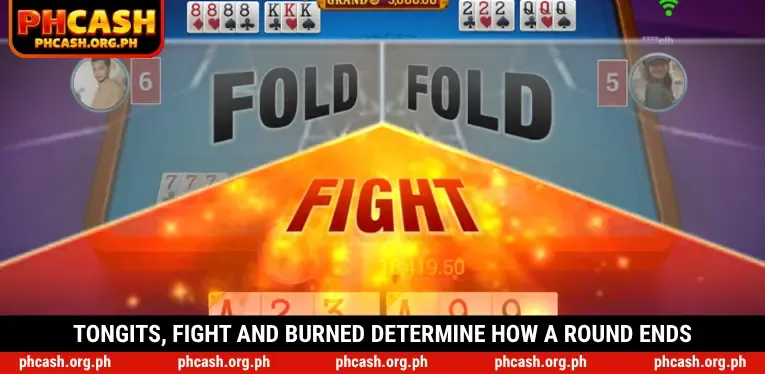
If you believe the remaining unmatched cards in your hand (deadwood) total fewer points than your opponents' hands, you may declare a Fight at the start of your turn (before drawing):
- Eligibility to Call Fight: You must have opened at least one meld (Bahay), and no opponent has executed a Sapaw on your opened melds during the preceding round.
- The Challenge Sequence:
- Both opponents can either Fold (concede and pay a standard penalty) or Challenge the Fight.
- If an opponent challenges, both players reveal their hands. The player with the lower numerical point count wins the pot.
- If the challenger has equal or fewer points than you, you suffer a Counter-Fight Loss (Supalpal) and pay heavy penalty points.
If the central stockpile of cards runs out without anyone calling Tongits or Fight:
- All players reveal their remaining unmelded cards.
- The player with the lowest cumulative point total wins the round.
Point Counting and Deadwood Valuation
When a round ends via Fight or Deck Depletion, unmelded cards held in players' hands are tallied using standard values:
| Card Rank | Point Value | Tactical Assessment |
|---|---|---|
| Ace | 1 Point | The safest card to hold in hand when preparing to call Fight |
| 2 through 9 | Face Value (2 to 9 Points) | Mid-tier risk; aim to meld or discard higher values early |
| 10, Jack, Queen, King | 10 Points Each | High-liability deadwood; prime targets for early discard |
The "Burned" (Sunog) Penalty:
If a round concludes and a player has failed to lay down at least *one valid meld (Bahay)* onto the table throughout the entire match:
- That player is classified as Sunog (Burned).
- A burned player is completely disqualified from winning, regardless of how few card points they hold.
- They must pay maximum penalty points to the winner, even exceeding standard loser deductions.
Advanced Strategy for Online Cash Tables
Mastering online Tongits requires blending probability analysis with psychological observation:
Pay strict attention to every card discarded into the central pile. If two Kings have already been discarded, the remaining two Kings in the deck can no longer form a three-card Trio. Avoid holding paired face cards that have become mathematically dead.
Avoid discarding cards that enable the player to your immediate right to "Chow". If they have been discarding low Spades, avoid throwing mid-tier Spades that could connect with their hidden hand. Throwing safe cards (Segunda) limits their ability to open a Bahay.
Never call a Fight with more than 15 total deadwood points unless the central deck has only 2 or 3 cards remaining. Top players prefer declaring Fight when holding between 1 and 8 points (e.g., an Ace and a 3), which makes a counter-fight challenge statistically suicidal for opponents.
Responsible Gaming with Skill-Based Card Games
While Tongits involves substantial tactical skill, short-term card distribution remains subject to statistical variance:
- Treat Wagers as Entertainment: Never play at stakes that generate financial pressure or anxiety.
- Avoid Chasing on Tilt: If you suffer a painful counter-fight loss (Supalpal), do not immediately jump to higher-stake tables to recoup funds.
- Use Platform Budget Limits: Set daily deposit controls on GCash or Maya to keep gaming spending strictly disciplined.
- Seek Support If Needed: If card gaming interferes with your family or work responsibilities, utilize self-exclusion features and contact player welfare charities like BeGambleAware or Gamblers Anonymous.
Frequently Asked Questions
Can I call Fight on the very first turn of the game?
No. You must have opened at least one valid meld (Bahay) onto the table before you are legally permitted to initiate a Fight challenge.
What happens if two players have identical point totals during a Fight?
If a player challenges a Fight and both hold the identical total deadwood score, the challenger (the defender) is awarded the victory over the player who initiated the Fight.
Can an Ace be connected with a King and a 2 in an Escalera?
No. In Tongits, the Ace can be used low (A-2-3) or high (Q-K-A), but "around-the-corner" sequences like K-A-2 are strictly invalid.
How does the computer prevent collusion in online Tongits?
Verified platforms like JLJL6 utilize automated seat randomization, IP-matching blocks, and continuous gameplay analytics to detect and ban players attempting to share table intelligence on mobile devices.
Can I cash out my Tongits table winnings instantly?
Yes. Winnings from completed tables credit directly to your platform wallet balance. Once standard 1x deposit turnover is fulfilled, you can withdraw your funds directly to your verified GCash or Maya account within minutes.
Player Advisory & Responsible Gaming: This guide is published for independent educational and informational purposes. Gambling carries financial risk and can become addictive. Only wager discretionary entertainment funds that you can afford to lose. Strictly for players aged 21 years and older in the Philippines.